
How to Start Investing with Just ₹500 a Month and Build Your Wealth as a Young Indian
- KarNivesh
- Jul 23
- 3 min read

by KarNivesh | 23 July, 2025
Investing may feel intimidating, especially for those new to managing finances. However, starting small can lead to significant wealth over time. If you’re a young Indian who has just begun your career and wants to invest, this guide will show you practical steps to start investing with just ₹500 a month.
Understanding the Importance of Early Investing
Starting early has many advantages. The sooner you begin, the more time your money has to grow thanks to compound interest. Investing small amounts regularly, like ₹500, helps you develop a habit of saving, which is crucial for financial stability.
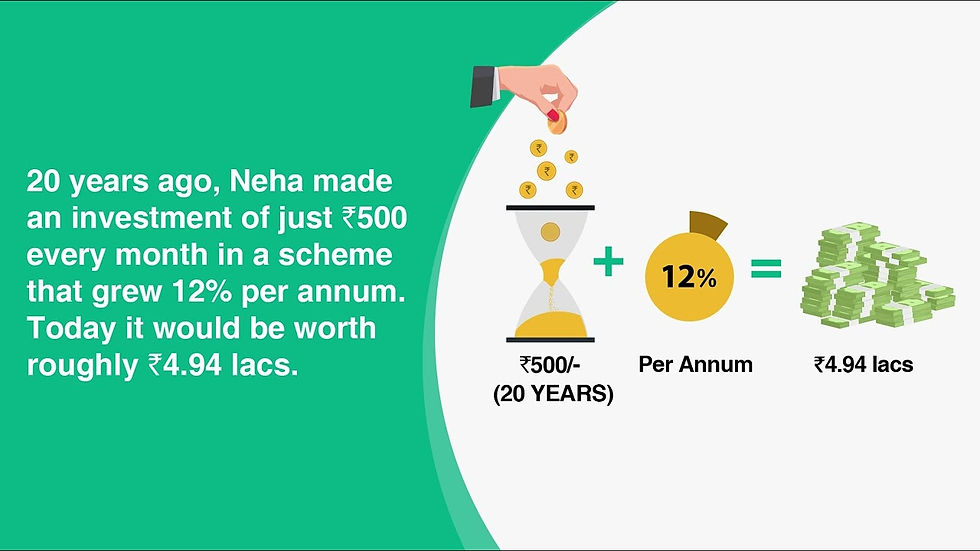
For example, if you invest ₹500 monthly in a scheme that earns you an average return of 12% per annum, you could accumulate around ₹7 lakh over 20 years! This illustrates just how powerful consistency can be.
Choosing the Right Investment Options
As a beginner, deciding where to invest your ₹500 might seem overwhelming. Here are some effective options:
Mutual Funds
One of the top ways to start investing in India is through Systematic Investment Plans (SIPs) in mutual funds. A SIP allows you to invest a fixed sum regularly, making it ideal for beginners.
Why Mutual Funds?
Diversification: Your money is combined with others', spreading risk across various assets.
Professional Management: Experienced fund managers handle all investment decisions on your behalf.
Affordability: You can kickstart your investment journey with just ₹500.
For potentially higher returns, consider investing in an equity mutual fund, but keep in mind the associated risks of market fluctuations. For instance, some equity funds have delivered returns of over 15% in recent years, demonstrating their potential.
Public Provident Fund (PPF)
Another excellent choice is the Public Provident Fund (PPF). It’s a government-backed savings scheme that guarantees attractive interest rates.
Tenure: 15 years
Interest Rate: Generally over 7%, which is higher than most savings accounts
Tax Benefits: Contributions qualify for tax deduction under Section 80C.
Even though you can't withdraw your money until the maturity period, PPF serves as a disciplined savings avenue with promising interest accrual.
Fixed Deposits (FDs)
If you prefer a low-risk approach, Fixed Deposits in banks can be suitable. While the returns are often lower than those from mutual funds, the capital is secure.
Safety: FD is among the safest investment options.
Guaranteed Returns: You know the exact amount you will earn upon maturity.
Flexibility: You can select a tenure that fits your financial needs.
Check interest rates from multiple banks to maximize your returns. Some banks even offer rates above 6% for certain tenures, increasing your earnings.
Creating Your Investment Plan
With several options available, let's explore how to develop a straightforward investment plan.
Set Financial Goals
Before investing, establish clear financial goals. Are you saving for travel, a new gadget, or a car?
Short-term Goals: Aims you seek to achieve within a year or two.
Long-term Goals: Goals that take several years, like buying a house or planning for retirement.
Clearly defined goals will guide your investment decisions.
Monthly Commitment
Make it a habit to invest ₹500 each month without fail. Here are a couple of practical steps:
Automatic Transfer: Set up an automatic transfer to your investment account when you receive your salary. This ensures you don't miss a month.
Budgeting: Allocate a specific portion of your budget for your investments.
Tracking Progress
Regularly monitor your investments to gauge performance. Utilize financial apps or spreadsheets to keep track of returns and adjust your portfolio occasionally.
Monitoring and Adjusting Your Portfolio
As your investments grow, reviewing and adjusting your portfolio is crucial.
Rebalance Your Investments
Over time, the growth of different investments may vary. Rebalancing involves adjusting your portfolio to achieve your preferred risk and return.
Regular Review: Set reminders to review your investments every six months.
Adaptability: If a fund underperforms, explore the option of switching to a more promising fund.
Stay Informed
The investment landscape is always changing. Stay updated on trends and economic factors through reputable news outlets.

Getting Started Today
Starting your investment journey with just ₹500 a month is entirely achievable and a smart way to grow wealth over time.
Investing early allows your money to compound, helping you reach your financial goals sooner. Commit to investing consistently, even in small amounts, because every rupee counts.
For a young Indian, embracing the habit of saving and investing early could lead to financial success. Choose investment options that match your financial goals and comfort with risk.
So, why wait? Start investing today and begin building a prosperous financial future!


Comments