
Psychology of Trading – How to Avoid Emotional Investing?
- Editor

- Oct 14, 2025
- 5 min read
by KarNivesh | 14 October, 2025
In the fast-paced world of financial markets, understanding the psychology behind trading decisions is just as important as mastering technical analysis or market fundamentals. While charts and data play a significant role, the human mind often proves to be the most unpredictable factor influencing investment outcomes. Emotions such as fear, greed, and overconfidence can derail even the most well-researched strategies, leading to poor timing, excessive losses, and missed opportunities. Recognizing and managing these emotional triggers is the foundation of successful trading.

The Emotional Brain in Trading
Trading psychology refers to the mental and emotional states that influence how traders make decisions. Neuroscience has shown that financial gains and losses activate the same brain regions involved in physical pleasure and pain. This is why losing ₹8,300 feels about twice as painful as the joy of gaining the same amount. This phenomenon, called loss aversion, explains why investors often cling to losing positions, hoping prices will rebound, and sell winning trades too early to “lock in” profits.
The amygdala, which controls fear responses, becomes hyperactive during market volatility. This ancient “fight-or-flight” reaction helped early humans survive physical danger but is counterproductive in financial markets where rational, long-term thinking is essential. Successful traders learn to suppress these instincts and replace emotional reactions with data-driven decision-making.
Major Psychological Biases in Trading
Behavioral finance identifies several cognitive biases that consistently affect investors regardless of experience or culture.
Loss Aversion: Research by Daniel Kahneman and Amos Tversky shows that people feel losses two to three times more intensely than equivalent gains. Losing ₹10,000 can feel as devastating as gaining ₹20,000–₹30,000 feels rewarding. This bias leads to the disposition effect, where investors hold onto losing stocks and sell profitable ones prematurely, reducing overall returns.
Overconfidence Bias: Success can easily inflate a trader’s confidence. Overconfident investors believe they can consistently time the market or identify winning stocks. However, studies reveal that frequent traders-often driven by overconfidence-tend to underperform passive investors due to higher transaction costs and poor timing. Early wins can cloud judgment, leading to excessive risk-taking.
Herd Mentality: Humans are naturally inclined to follow the crowd. In financial markets, this manifests when investors buy at peaks driven by euphoria and sell at lows out of fear. The Indian markets have seen this repeatedly-from the dot-com bubble to the cryptocurrency mania. Following the herd often means entering or exiting trades at exactly the wrong time.
Anchoring Bias: Many traders fixate on arbitrary numbers such as purchase prices or past highs. For example, an investor who bought a stock at ₹100 might refuse to sell it at ₹85, even if fundamentals suggest its fair value is only ₹70. Anchoring prevents rational evaluation based on current information.
The Financial Impact of Emotional Investing
Emotional decisions can severely undermine portfolio performance. According to research by DALBAR Inc., the average investor underperforms the market by a wide margin due to poor timing caused by emotional reactions. Over decades, these small missteps compound, cutting long-term returns by more than half.
Market timing-trying to predict when to enter or exit-is notoriously difficult. Missing just the 10 best trading days in 20 years can reduce returns by over 50%. In volatile markets like India’s, where indices such as NIFTY 50 and SENSEX often swing 2–3% daily, emotional reactions are even more likely.
Strategies to Overcome Emotional Investing
Mastering trading psychology requires discipline, planning, and emotional awareness. Below are some practical strategies that help investors build consistency and avoid common psychological traps.
1. Develop a Written Trading Plan:A detailed trading plan acts as an emotional safeguard. It should outline clear entry and exit criteria, position sizes (typically 1–3% of capital per trade), and stop-loss limits. During volatile periods, this plan serves as a guide to prevent impulsive decisions.
2. Automate Risk Controls:Automation eliminates emotion from critical decisions. Using stop-loss and take-profit orders ensures trades are executed based on logic, not fear or greed. Many professional traders risk only 1–2% of their total capital per trade, protecting their portfolios even after a series of losses.
3. Practice Rupee-Cost Averaging:Rupee-cost averaging (the Indian equivalent of dollar-cost averaging) involves investing a fixed amount regularly, regardless of market conditions. For instance, investing ₹41,500 monthly in a diversified mutual fund promotes discipline and consistency. This method buys more units when prices are low and fewer when high, reducing regret and timing pressure.
4. Maintain a Trading Journal:Documenting every trade-along with the emotions behind it-can reveal behavioral patterns. Recording entries, exits, and emotional states helps traders identify triggers that lead to poor decisions. Reviewing this data over time improves self-awareness and discipline.
5. Incorporate Mindfulness and Stress Management:Mindfulness practices, such as meditation and deep breathing, help traders stay calm during volatility. Studies show that just 10–15 minutes of daily meditation can reduce stress hormones by over 50%. Mindfulness promotes clear thinking and prevents impulsive reactions to market fluctuations.

Building Long-Term Discipline
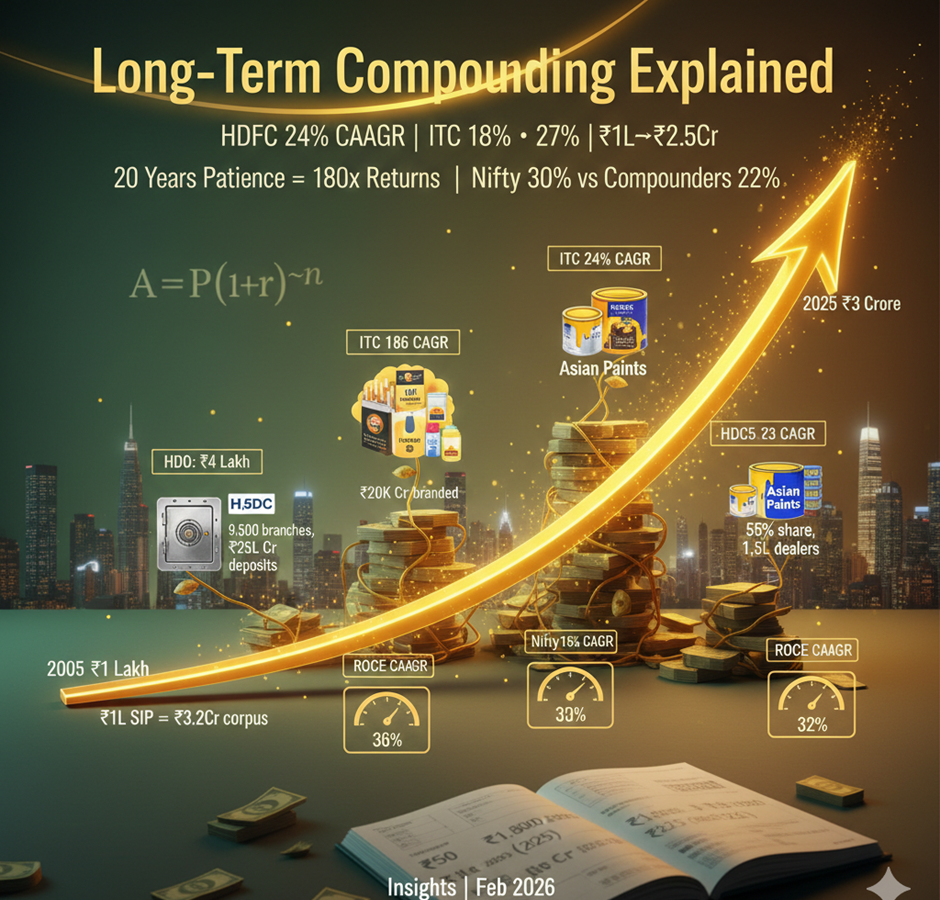
Successful investing is not about winning every trade but maintaining discipline over the long run. Understanding the power of compounding can strengthen patience-at a 12% annual return, a portfolio doubles every six years. Staying invested through ups and downs is key to capturing these long-term gains.
Viewing losses as lessons rather than failures is equally important. Every professional trader experiences losing trades, but what separates winners is their ability to learn, adapt, and avoid revenge trading. Keeping losses small and analyzing mistakes ensures continuous improvement.
The Indian Context: Cultural and Technological Influences
In India, cultural factors often influence trading psychology. The desire to “save face” may prevent investors from admitting mistakes, while social pressure or stories of friends’ profits can trigger FOMO (fear of missing out). Festive seasons also bring market volatility as optimism or pessimism peaks among retail investors.
Technology offers both advantages and challenges. Automated platforms, AI-driven analytics, and trading bots can help enforce discipline. At the same time, constant notifications and social media updates increase anxiety and encourage overtrading. The key lies in using technology as a tool-not letting it dictate your emotions.
Conclusion: The Road to Emotional Mastery
Emotional investing is one of the biggest obstacles to long-term success. The best traders are not necessarily the smartest or most analytical-they are the most disciplined. Developing emotional resilience, following structured strategies, and practicing mindfulness transform trading from a gamble into a systematic pursuit.
Ultimately, markets will always test your patience and psychology. By understanding your emotional triggers and maintaining a process-driven approach, you can harness the power of disciplined investing and avoid the costly pitfalls of emotional decisions. Success in trading isn’t just about reading charts-it’s about mastering your mind.


Comments